Use a WeChat Mini App to Bring Participatory Budgeting to 3 Million People in Chengdu
by the Social Equity and Participation Centre (SEPC)
Bringing Participation to People’s Fingertips
In 2022, we at the Social Equity and Participation Centre (SEPC) launched a WeChat mini app that turned participatory budgeting (PB) into a digital experience. Within a year, more than 3 million Chengdu residents were using it to propose ideas, vote on projects, and monitor how public funds were spent — all from their phones. This innovation made citizen participation easier, more transparent, and far more affordable for both communities and local governments.
From Neighbors to Citizens: Mr. Zhang’s Story
When Mr. Zhang* retired from factory work and returned to his childhood neighborhood, he quickly saw ways to help. “I noticed the community management was a bit messy,” he laughed. “They asked me to help, and I said yes.” He began volunteering, organizing activities, and helping with local patrols. In 2014, he discovered PB — a process that let residents decide how part of the government budget should be spent. His first idea was a disaster-preparedness drill for his neighborhood. The project was approved and completed through the PB mini app. “Without PB,” he said, “we wouldn’t have a way to say what we want and make it happen.”
Mr. Zhang (third from left) in a neighborhood council meeting
How Participatory Budgeting Took Root in Chengdu
PB began in 2008, when Chengdu’s government wanted a new way to balance urban and rural development. SEPC saw it as a natural fit for China’s long tradition of collective decision-making through local committees of elders and officials. Since then, PB in Chengdu has followed a six-step process: 1. Outreach → 2. Idea Collection → 3. Deliberation → 4. Voting → 5. Implementation → 6. Evaluation. By 2012, the model had expanded to include nearly all of Chengdu’s urban neighborhoods.
A Government Partner’s Perspective
“Before PB, residents relied on government to do everything,” recalls Mr. Chang*, a district official. “Now, they feel like true owners of their communities.” At first, community staff found PB complicated and intimidating. Together with district offices, SEPC developed a practical guidance manual that built confidence and clarified each step. By 2021, staff participation had climbed to 95 percent — a milestone for sustained civic engagement.
Why We Went Digital
Even with strong participation, we still faced a challenge: reaching younger residents and marginalized groups. “Important voices were missing,” remembers Rae Liu, SEPC’s Research Manager. Paper surveys and bulletin-board announcements couldn’t reach everyone — and they were expensive to manage. The COVID-19 pandemic pushed us to rethink everything. With in-person meetings impossible, the government finally had the momentum to take PB online. Instead of creating a new app, SEPC used what people already knew best: WeChat. As Ming Zhuang, the Founder of SEPC explains, “It’s easier to click an app that’s already on your phone than download something new.” After two years of testing, the WeChat PB mini app launched city-wide in 2022 — the first of its kind in China.
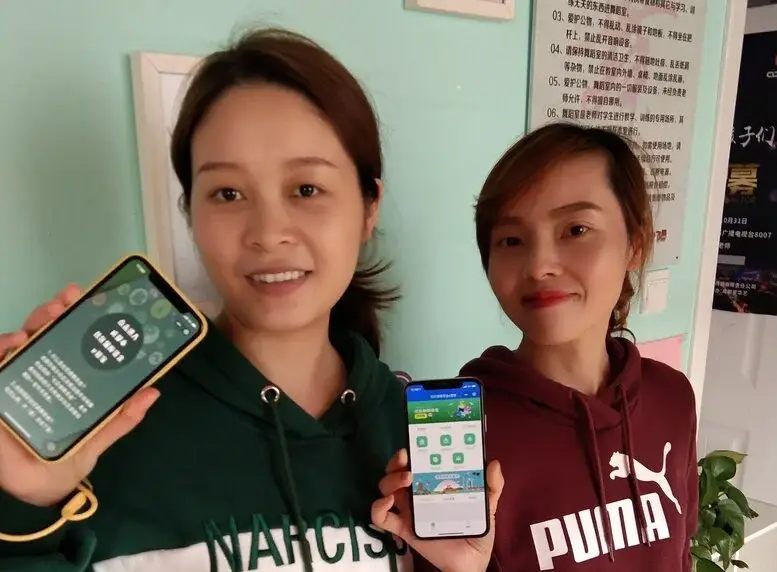
What users of the mini app see during one of the voting phases.
Inside the Mini App: How It Works
The app mirrors the full PB process in five easy steps, all accessible through WeChat:
1. Proposal Collection: Residents submit ideas for local improvements — from playgrounds to gardens to neighborhood clean-ups. All proposals are visible to everyone.
2. Voting: People browse shortlisted projects and vote for their favorites. In 2022, residents submitted 250 000 proposals; around 20 000 were funded, totaling USD 200 million in local investment.
3. Contractor Selection: Bidding for projects is public. Budgets, timelines, and results are displayed openly, allowing residents to track how funds are used.
4. Implementation & Monitoring: Users select “I want to monitor” to follow projects in real time, upload photos, and report quality concerns.
5. Evaluation: At year’s end, contractors submit results and residents rate projects with one to five stars. Payments now depend on community satisfaction scores above 80 percent — ensuring accountability.
“For the first time, people can see where the money goes — and raise the alarm if something looks wrong.” — Ming Zhuang
Online + Offline: A Hybrid Mode
It is known that digital tools don’t replace face-to-face participation — they enhance it. While WeChat brings convenience, in-person discussions allow for deeper debate and inclusion. That’s why SEPC is piloting hybrid PB councils where residents join both online and offline. Those at home can comment through WeChat, and their words appear on a live screen for everyone to see. For older residents unfamiliar with smartphones, the community staff still visit door-to-door to help them log in or vote. No one should be left out of participation.
The Results So Far
Today, nearly 3 000 of Chengdu’s 3 044 neighborhoods are part of PB. Among the city’s 23 million residents, more than 3 million are registered PB users — about 10 percent of the population. Since 2021, citizens have submitted over 1.3 million proposals, with up to 70 percent submitted online. Each year, more than 30 000 community projects are implemented — from small parks to cultural centers and sanitation upgrades. What’s most exciting is that multiple people per household now participate, rather than a single representative. PB has become a shared family conversation, not just a government program.
Building Transparency and Trust
The new platform has also revolutionized how public funds are managed. Before, there was no easy way to monitor spending. Now, both officials and residents can track progress in real time.
“There was no intuitive way to check project status before. Now it’s all there in the app.” — Mr. Chang, District Official
This transparency has reduced the risk of misuse and built greater trust between communities and government. For SEPC, it’s the fulfillment of a vision we had years ago: open governance made possible through technology and cooperation.
Lessons Learned and The Next Step
This journey shows that digital participation succeeds only when grounded in local culture and relationships. The WeChat mini app worked because it was familiar, inclusive, and community-driven. SEPC continue to improve the platform and share the learning with other cities in China and beyond. At SEPC, it is believed that participation is the foundation of equity. The digital PB experience in Chengdu proves that with the right tools — and a commitment to listening — citizens can shape the future of their own neighborhoods. Mr. Zhang still uses the WeChat app regularly. “It’s convenient,” he says. “I don’t have to go anywhere — I just open my phone.” His disaster-preparedness idea was implemented, and he’s proud of what his community achieved together.
“Participatory budgeting gives us a way to speak up and see results,” says Mr. Zhang. “It makes our community stronger.”
This case illustrates how technology can deepen democracy when built upon strong local traditions of civic participation.
*Their full names and titles have been withheld at their request.