
By Suyun Woo
In a nation often characterized as authoritarian, local governance in China tells a more nuanced story. Research led by Suyun Woo, from the International Center for Social Equity and Participation, and featured in SWI swissinfo.ch, explores how democratic practices—such as citizen consultation and participatory budgeting—are emerging within local Chinese politics.
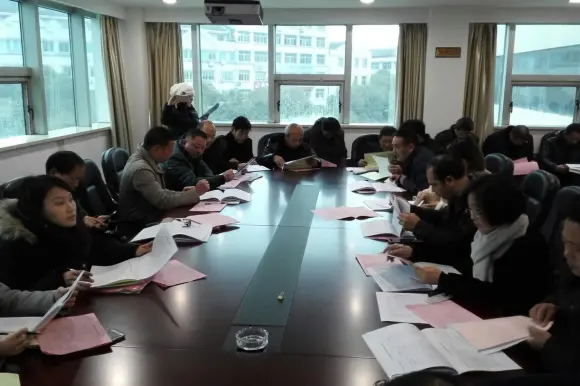
In cities like Chengdu and Wenling, residents are invited to discuss priorities for public spending and community projects. These participatory forums, however, are not designed to challenge the Communist Party’s authority but to strengthen administrative efficiency and legitimacy. Woo’s analysis reveals that this “managed participation” allows citizens to voice opinions while ensuring outcomes align with government objectives—a delicate balance between inclusion and control. Wenling’s “deliberative democracy” experiments, for instance, involve public hearings where villagers debate budget allocations. Similarly, in Chengdu, participatory budgeting engages citizens in deciding local expenditures, creating a sense of shared responsibility. Despite being framed as democratic exercises, these processes remain tightly supervised and politically constrained.
Woo’s research highlights how China’s model of participation reflects a broader redefinition of governance—where citizen input is encouraged only within boundaries set by the state. This hybrid approach blends democratic mechanisms with authoritarian oversight, fostering what some scholars call “consultative authoritarianism.” Such initiatives also underscore a pragmatic motive: improving governance outcomes and reducing social tension. By engaging citizens, local authorities can pre-empt dissent, gather useful feedback, and enhance policy effectiveness without compromising central control. Ultimately, Woo argues that while these efforts mimic the forms of democracy, they serve distinctly different ends. They are less about empowering citizens and more about refining governance to sustain stability and trust in local administrations. This raises an important question for observers of Chinese politics: can participation without power still be considered democratic?
The case studies of Chengdu and Wenling illustrate that even within a one-party system, governance experiments can create spaces for limited civic engagement. Yet, as Woo notes, these processes operate within the logic of the Party-state, where participation functions as an instrument of control as much as inclusion. For those interested in the intersections of democracy, governance, and social equity, Woo’s research offers valuable insight into how participatory models adapt to different political realities. China’s local democracy is not a contradiction but a carefully managed innovation—one that invites the world to rethink what democracy means in practice under authoritarian rule.
In 2024, Suyun’s book Deliberation with Chinese Characteristics: A Tale of Two Chinese Cities’ Participatory Budgeting Experiences was published by Routledge. The book is available both on the publisher’s website and Amazon.com.

The Author
Suyun Woo is a Lead Researcher at ICSEP. She is currently an Assistant Professor in Public Governance and Transformation at the University of Twente in the Netherlands. Her research bridges theory and practice—from investigating emerging modes of digital participation in China to examining how civil society partners undertake inclusive, community-driven policymaking. Before joining the University of Twente, she completed her PhD at the University of Zurich’s Institute of Political Science. She is passionate about designing and evaluating democratic processes that ensure every voice can be heard—not only in principle, but in real decision-making spaces.