
By Tashanna Walker
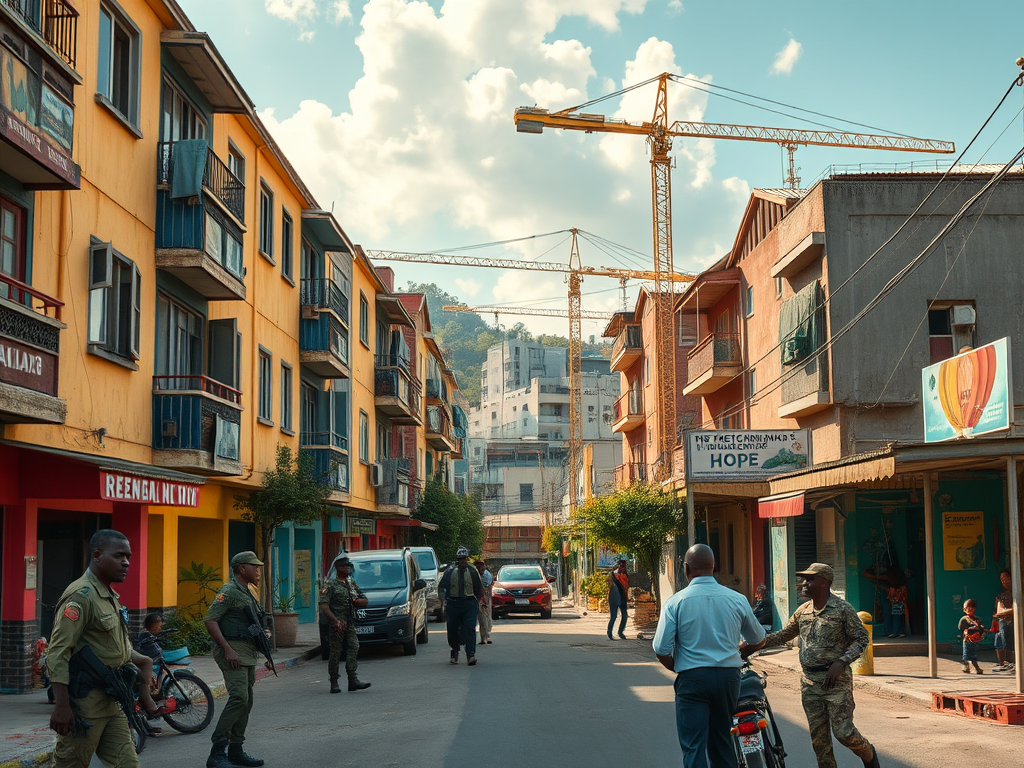
For decades, the governments of Latin America and the Caribbean have sought to maximize international investment opportunities while mitigating concerns about crime and violence, particularly in urban areas. Kingston, the capital of Jamaica, provides a striking example of this delicate balance. In recent years, the Jamaican government has adopted new security strategies to confront gang violence and stabilize inner-city neighborhoods. The most prominent of these is the Zones of Special Operations (ZOSO) Act, passed in 2017.
The ZOSO initiative is part of Jamaica’s broader approach to urban redevelopment. It authorizes the military and police to jointly occupy volatile neighborhoods for extended periods, with the goal of “clearing” criminal networks, “holding” territory to maintain stability, and then “building” new social and physical infrastructure. In practice, ZOSO has combined curfews, checkpoints, and patrols with targeted investments in skills training and education for residents while improving the quality of community facilities.
To this end, the Jamaican government has partnered with multilateral organizations such as the World Bank, USAID, and the Jamaica Social Investment Fund to channel billions of Jamaican dollars into social and infrastructural projects. Chinese investors familiar with public-private partnerships in Africa and Southeast Asia will recognize the pattern: security initiatives create conditions for redevelopment, and redevelopment opens doors for foreign investment in housing, transport, and services. Yet, there are complexities.
Research shows that while ZOSO has reduced some immediate violence, it has not fully solved the root causes of crime. Residents often experience heavy surveillance, detentions, and loss of trust in state institutions. This means investors need to be sensitive to social dynamics when engaging in urban projects. As such, building community trust, partnering with local organizations, and understanding the realities of marginalized neighborhoods will be crucial to long-term success. At the same time, community resilience and creativity are strong as residents often adapt, negotiate, and resist militarization in ways that reaffirm their identity and social bonds. This underscores the importance of inclusive development, projects that generate employment, skills training, and visible benefits for local residents are more likely to thrive.
What is happening in Kingston is not unique. Similar models of security-driven urban redevelopment can be seen in Medellín, and Brazil’s favelas. The Caribbean, however, represents a distinct context, that is, small island developing states with open economies, reliant on tourism and foreign investment, but also facing high levels of inequality and vulnerability to global shocks. Thus, strategic investments in infrastructure, renewable energy, housing, and digital technology can both complement government programs like ZOSO and demonstrate commitment to long-term stability and growth. Success, however, will depend not only on financial capital, but also on cultural awareness, local partnerships, and a vision that balances profit with social responsibility.

The Author
Tashanna Walker is a Lead Researcher at ICSEP. Her expertise is urban redevelopment, security, and improving human capacity across Latin America and the Caribbean. She is currently a Postdoctoral Research Fellow at the City University of New York (City College) and Visiting Scholar at the University of Pennsylvania. Her work has been supported by prestigious fellowships such as those from the Social Science Research Council and the American Association of University Women, and her insights have been shared in policy reports, public forums, and international media.